
Stainless Steel Turnbuckles — Marine Grade Rigging Screws
316 stainless steel turnbuckles from 3/16" to 1-1/2", with working loads from 100 to 17,000 lb. Jaw, eye,…
View →
Perforated metal mesh is a flat sheet of stainless steel, carbon steel, aluminium or galvanised steel pierced with a uniform pattern of holes. The hole shape, pitch and open area are selected to balance strength, airflow and visibility for the job at hand. We punch round, square, slotted, hexagonal and decorative patterns in sheet from 0.3 mm to 12 mm thick, with hole diameters from 0.5 mm up to 25 mm and open areas from roughly 5% to 75%. Sheets are supplied flat, cut to size, or levelled and finished to suit the panel.
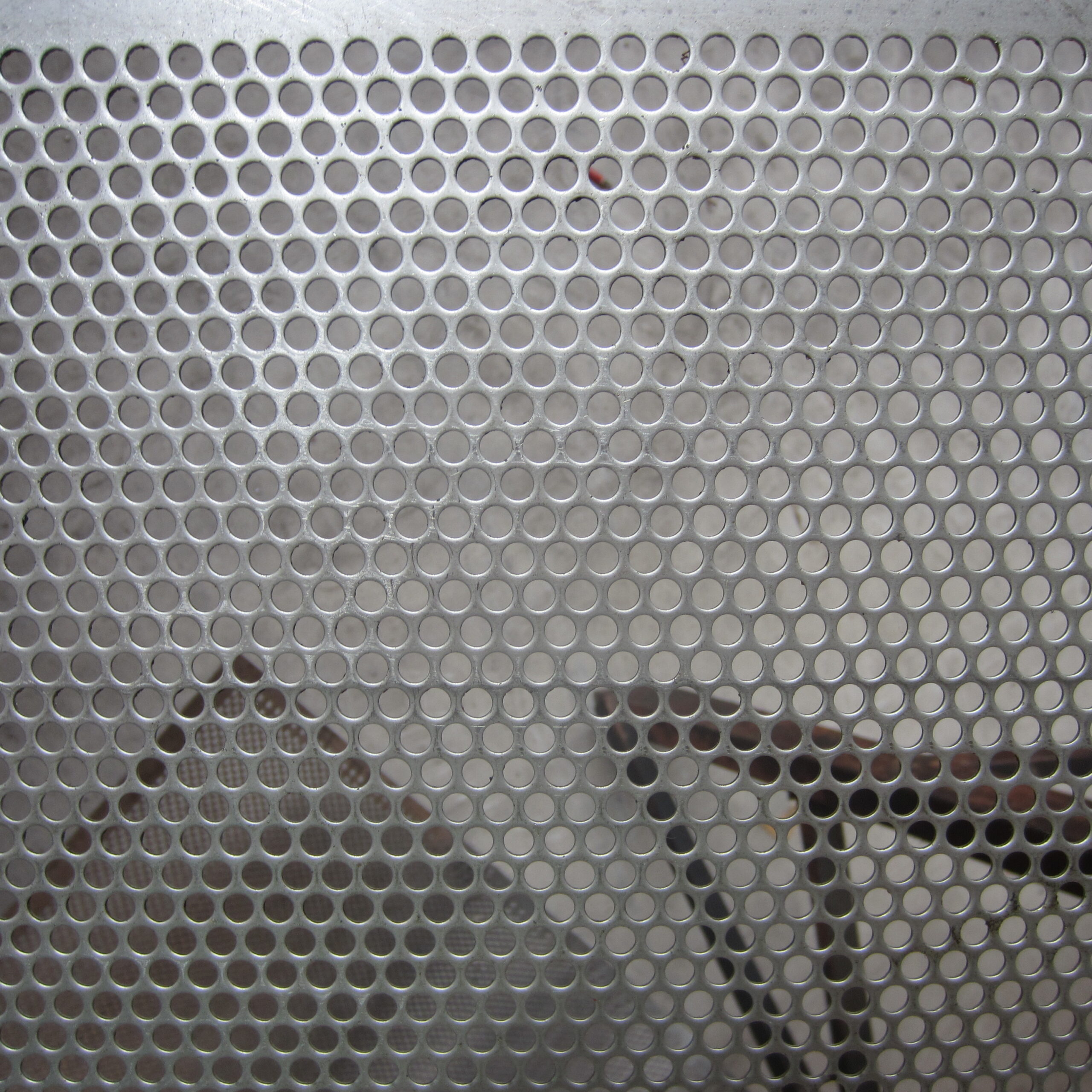
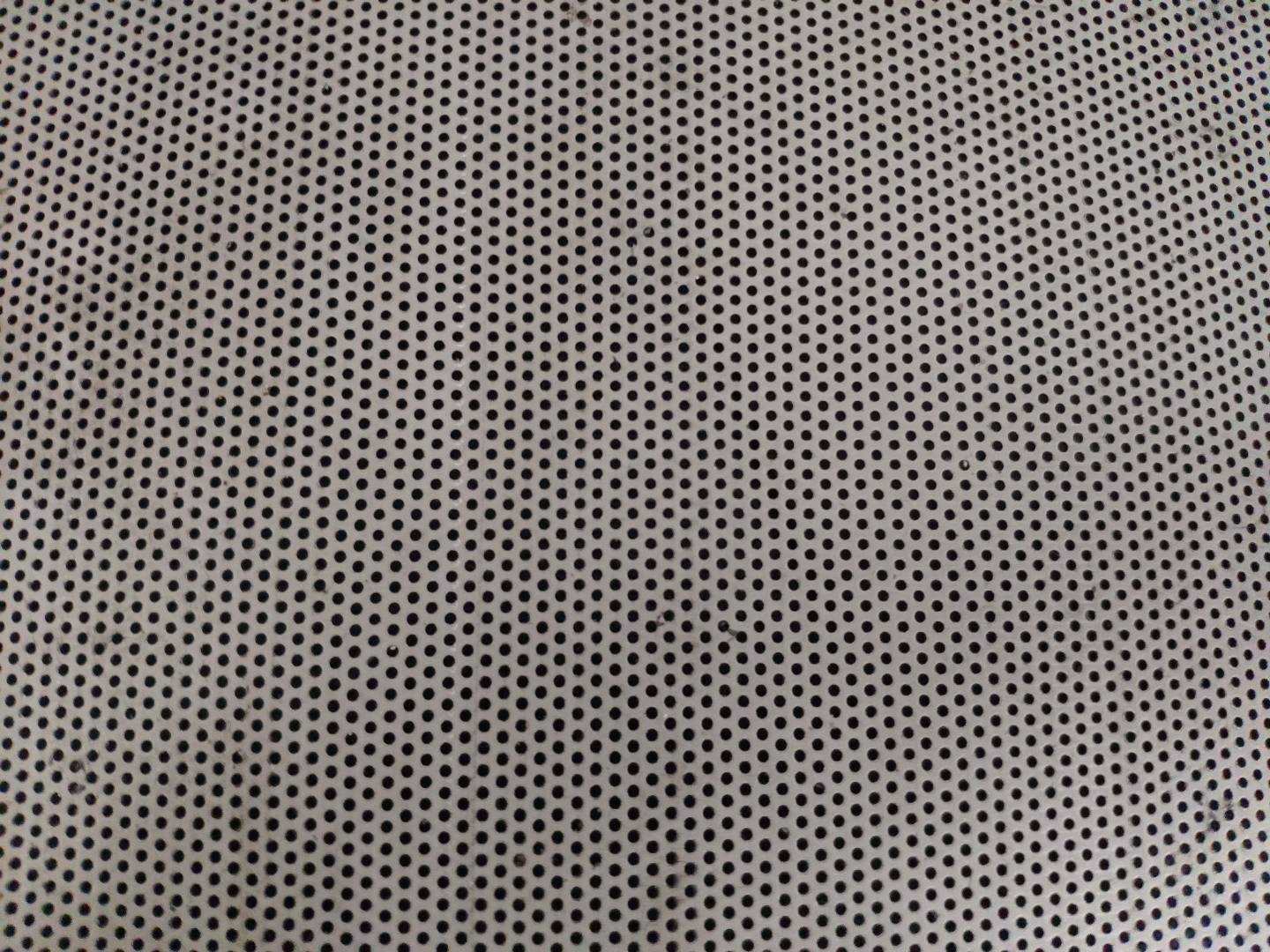
Open area (OA) — the free void as a share of the sheet surface — is the number that drives airflow, light and filtration. For the three most common patterns:
D = hole diameter, S = square side, P = pitch (centre-to-centre), all in millimetres. Use the table below to read off common combinations.
Open area (%), round holes on 60° staggered centres
| Pitch P (mm) | D = 1.0 | D = 2.0 | D = 3.0 | D = 4.0 | D = 5.0 | D = 6.0 | D = 8.0 | D = 10.0 |
|---|---|---|---|---|---|---|---|---|
| 2.5 | 14.5% | — | — | — | — | — | — | — |
| 3.0 | 11.0% | 40.3% | — | — | — | — | — | — |
| 4.0 | 8.8% | 22.7% | 50.9% | — | — | — | — | — |
| 5.0 | — | 14.5% | 32.6% | 57.9% | — | — | — | — |
| 6.0 | — | 10.0% | 22.7% | 40.3% | 62.8% | — | — | — |
| 8.0 | — | — | 12.7% | 22.7% | 35.4% | 50.9% | — | — |
| 10.0 | — | — | — | 14.5% | 22.7% | 32.6% | 57.9% | — |
| 12.0 | — | — | — | 10.0% | 15.7% | 22.7% | 40.3% | 62.8% |
| 15.0 | — | — | — | — | 10.0% | 14.5% | 25.8% | 40.3% |
| 20.0 | — | — | — | — | — | 8.8% | 14.5% | 22.7% |
Read across: a 5 mm hole on an 8 mm pitch (row 8, column D=5.0) gives 35.4% open area. As a rule of thumb, standard perforated metal lands between roughly 15% and 45% open; above about 40% the actual ligament between holes gets thin and the sheet becomes noticeably more flexible.
Sheet thickness vs. typical use
| Thickness (mm) | Imperial gauge | Stiffness | Typical use |
|---|---|---|---|
| 0.3 – 0.5 | ~28 – 26 GA | Very flexible | Speaker grilles, decorative panels, lamp shades |
| 0.6 – 1.0 | ~24 – 20 GA | Flexible | Architectural screens, acoustic panels, cabinet vents |
| 1.0 – 2.0 | ~18 – 14 GA | Moderate | Sun screens, façade cladding, filtration backing plates |
| 2.0 – 3.0 | ~12 – 10 GA | Stiff | Industrial screens, coarse filtration, anti-slip flooring |
| 3.0 – 6.0 | 1/8" – 1/4" | Very stiff | Heavy-duty grating, load-bearing platforms, machine guards |
| 6.0 – 12.0 | 1/4" – 1/2" | Bearing grade | Structural covers, crush screens, mining equipment |
Hole pattern quick reference
| Pattern | Typical size range | Arrangement | Practical max open area | Best use |
|---|---|---|---|---|
| Round | d = 0.5 – 50 mm | 60° staggered | ~60 – 70% | Filtration, ventilation, acoustic, guards |
| Round | d = 0.5 – 30 mm | Straight (inline) | ~50 – 55% | Decorative panels, low-cost screening |
| Square | a = 0.8 – 50 mm | Inline / 45° staggered | ~55 – 60% | Sizing screens, grain & aggregate grading |
| Slotted | w = 0.3 – 10 mm, l up to 100 mm | Rows, staggered / inline | ~60 – 70% | High-flow screening, ventilation grilles |
| Hexagonal | 3 – 40 mm across flats | Nested honeycomb | ~65% | Architectural cladding, reinforcement cores |
Other specs: Material carbon steel / galvanised steel / 304 & 316 stainless / aluminium 3003 & 5052 / brass / copper / weathering steel; sheet thickness 0.3 – 12 mm (26 GA to 1/2"); hole diameter 0.5 – 25 mm; open area approx. 5 – 75%; hole tolerance about ±0.08 mm on 10 mm holes (±0.05 mm on precision tooling); standard sheet sizes 1000×2000, 1220×2440 (4′×8′), 1500×3000 mm, custom cut-to-size; finishes plain, powder-coated, PVC-coated, anodised, PVD, polished or galvanised. Contact us with your hole size, pitch and sheet dimensions and we will quote against stock or custom tooling.