
Stainless Steel Turnbuckles — Marine Grade Rigging Screws
316 stainless steel turnbuckles from 3/16" to 1-1/2", with working loads from 100 to 17,000 lb. Jaw, eye,…
View →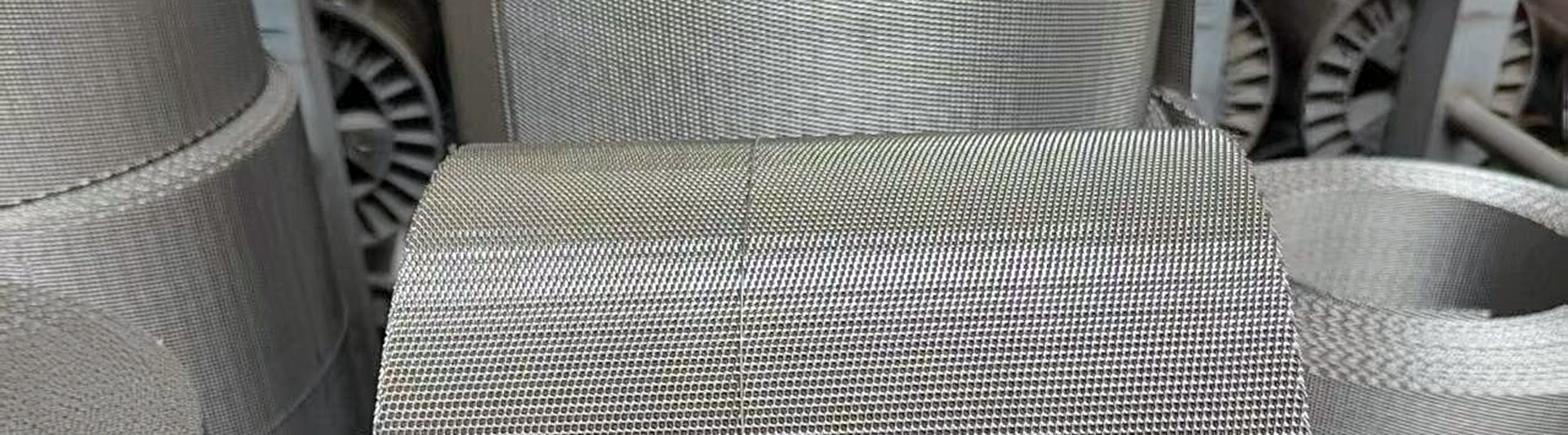
Dutch weave wire cloth in plain, twill and reverse weaves for fine filtration. Plain Dutch 8-350 micron, twill Dutch to 1-2 micron nominal; 304/316 stainless and nickel alloys. Cut to size.
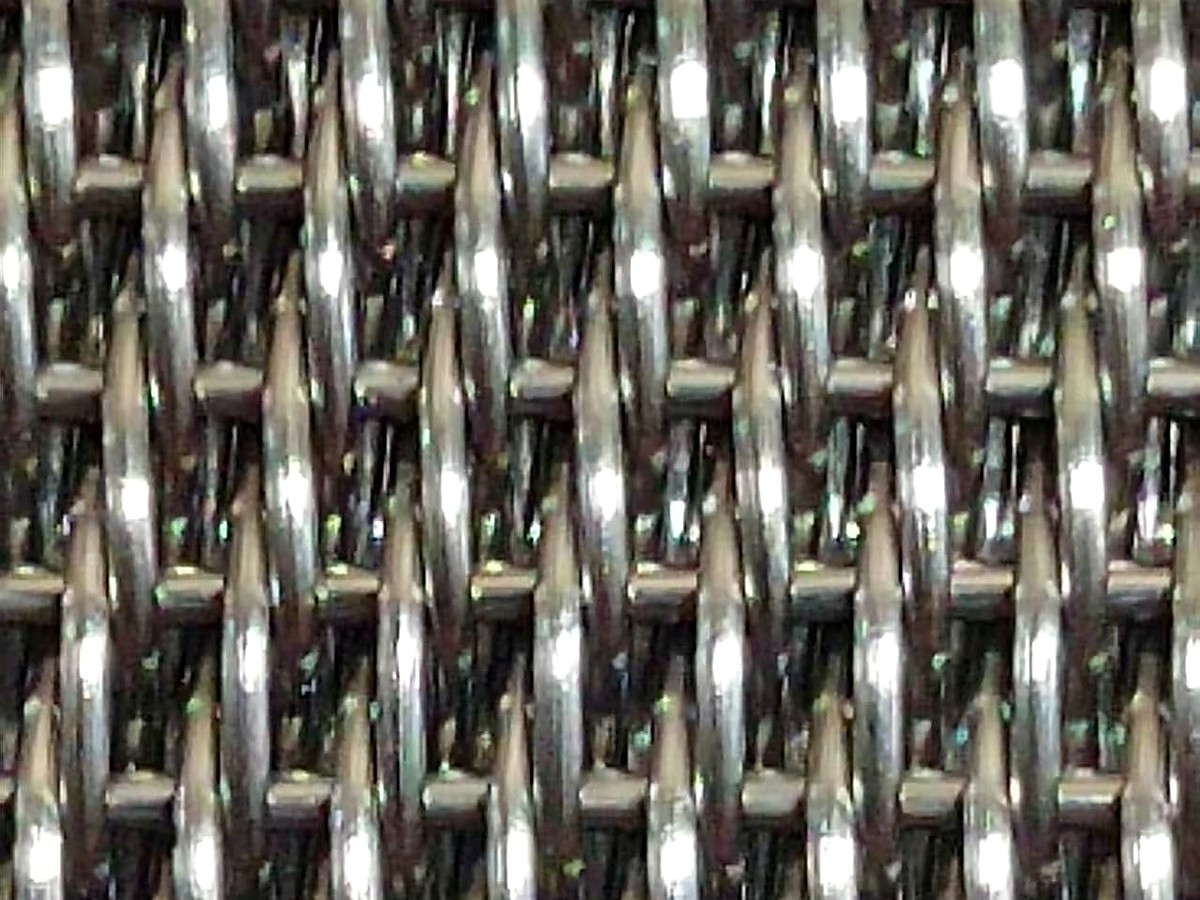
Dutch weave mesh is a dense woven wire cloth built from two wire diameters instead of one. Thin wires are woven in the weft direction and heavy wires in the warp, with the thin wires packed tightly against each other. The openings that result run diagonally through the cloth — which is why they cannot be seen with the naked eye yet still define a precise filtration rating.
Against a square weave of the same mesh count, Dutch weave gives a finer effective opening and a higher dirt-holding capacity. That combination is why it is the standard choice for fine liquid and gas filtration, and for polymer melt filtration in extrusion lines.
Three weaves cover most requirements: plain, twill and reverse Dutch. Each trades filtration fineness, mechanical strength and service life differently. Material is selected to match the medium; the weave is selected to match the duty.
Dutch weave mesh is specified by weave type, mesh count (warp × weft), wire diameters, absolute and nominal retention, thickness and weight. The tables below list representative grades; confirm the final specification against the medium, working pressure and cleaning method before ordering.
Weave types
| Weave | Structure | Typical use |
|---|---|---|
| Plain Dutch Weave (PDW) | Fine weft wires packed against heavy warp wires | General fine filtration |
| Twill Dutch Weave (DTW) | Weft passes over and under two warp wires; denser | Finer filtration, smoother face |
| Reverse Dutch Weave (RDW, PZ) | Many thin warp wires, heavy weft wires — the inverse of PDW | Solid filtration, heavy cleaning, backwashing |
| Atlas / 5-heddle | Four wires up, one down; one smooth face | Easy filter cake release |
| Multiplex / composite | Multi-layer, woven or sintered | High differential pressure, long life |
Plain Dutch Weave (PDW) — representative grades
| Mesh (warp × weft) | Absolute retention (µm) | Nominal retention (µm) | Thickness (in) | Weight (lb/ft²) |
|---|---|---|---|---|
| 8 × 85 | 330–350 | 250 | — | — |
| 12 × 64 | 280–300 | 200 | 0.048 | 0.76 |
| 14 × 88 | 220–240 | 150 | 0.037 | 0.69 |
| 20 × 150 | 170–190 | 100 | — | — |
| 24 × 110 | 112–125 | 80 | 0.030 | 0.52 |
| 30 × 150 | 95–110 | 63 | — | — |
| 40 × 200 | 75–80 | 56 | 0.016 | 0.27 |
| 50 × 250 | 56–63 | 40 | 0.012 | 0.22 |
| 80 × 400 | 36–45 | 45 | — | — |
| 165 × 1400 | 16–18 | — | 0.006 | 0.16 |
| 325 × 2300 | 8–9 | — | 0.003 | 0.10 |
Reverse Dutch Weave (RDW, also called PZ mesh) — representative grades
| Mesh (warp × weft) | Retention (µm) | Note |
|---|---|---|
| 66 × 18 | 200 | Porosity approx. 66 % |
| 84 × 25 | 150 | — |
| 130 × 30 | 100 | — |
| 175 × 40 | 104 | — |
| 290 × 60 | 50 | — |
| 625 × 104 | 30 | — |
| 1005 × 200 | 10 | — |
| 48 × 10 to 250 × 40 | 400 to 75 | Screen-changer belts, five grades coarse to finest |
Materials
| Group | Grades |
|---|---|
| Stainless steel | 304, 316, 304L, 316L, 321, 330, 347, 410, 430, 904L |
| Duplex | Duplex, super duplex |
| Nickel alloys | Inconel 600, Incoloy, Hastelloy B / C / C22, Monel 400, Nickel 200, molybdenum |
| Non-ferrous and precious | Aluminium, copper, brass, phosphor bronze, cupro-nickel, titanium, gold, silver |
| Carbon steel | Low carbon (galvanised available), high carbon, oil-tempered |
Supply forms
| Form | Range |
|---|---|
| Rolls | Up to 120 in (approx. 3 m) wide, up to 1,000 ft long; slitting down to 1/2 in |
| Sheets and strips | Cut to drawing |
| Discs | Up to 1200 × 1200 mm; welded composite discs up to 3 m |
| Fabricated parts | Filter elements, discs, baskets, screen cylinders |
Specification formulas
Opening + wire diameter = mesh centres; mesh count = 1 ÷ (opening + wire diameter); open area = (opening × mesh count)² × 100 %; 1 inch = 25,400 microns.
Dutch weave mesh is used wherever filtration has to be fine, repeatable and durable.
By application — polymer melt filtration, screen-changer belts, hydraulic and fuel filtration, filter presses and rotary drum, disc and horizontal vacuum belt filters, cake dewatering and backwashing, filter baskets and elements, spinneret screens, test sieve cloth, pulp moulding and papermaking, demineralisation and water softening, insect screening and guards.
By industry — polymer and plastics processing, chemical and petrochemical, pharmaceutical, food and beverage including brewery source-water filtration, pulp and paper, water and wastewater, mining and aggregates, automotive filtration, power generation, aerospace, and metal finishing.
Weave selection by duty — plain Dutch weave for general fine filtration; twill Dutch weave where a finer rating or a smoother face is needed; reverse Dutch weave for solid filtration, heavy-duty cleaning and backwashing; optimised Dutch weave for high-viscosity polymer melts.
What is Dutch weave mesh? A woven wire cloth made from thin weft wires and heavy warp wires, which produces diagonal micro-openings instead of square ones.
How does it differ from a square weave? The openings are smaller and run at an angle through the cloth, which gives finer filtration and higher dirt-holding capacity at the same mesh count.
Plain Dutch or twill Dutch — which should I choose? Twill Dutch weave is denser, reaches a finer micron rating, and presents a smoother surface.
What filtration fineness is achievable? Twill Dutch weave reaches a nominal 1–2 µm; plain Dutch weave typically covers 8–350 µm.
Where is reverse Dutch weave used? In solid filtration, heavy-duty cleaning, centrifugal cake removal and backwashing, where warp-direction strength matters.
Which materials are available? Stainless steels such as 304 and 316, plus Monel, Hastelloy, Inconel, duplex grades and carbon steels.
Other options: finishing includes stretching, degreasing, calendering, vacuum annealing, passivation or electropolishing, and laser cutting; discs can be supplied welded into composite assemblies up to 3 m; rolls can be slit to narrow widths for screen-changer belts.